← Collo

Collo Blog

Practical tips on daily planning, productivity, and building better habits.

The Power of Picking Just 3 Priorities

Most of us start the day with a long to-do list — 10, 15, even 20 items. By evening, we've checked off a few easy ones but the important tasks remain untouched. Sound familiar?

Research in cognitive psychology suggests that our brains aren't built for long lists. When faced with too many options, we experience decision fatigue — the mental exhaustion that comes from making too many choices. The result? We default to easy, low-impact tasks.

The Top 3 Method

The solution is deceptively simple: each morning, choose exactly three priorities. Not five, not "a few" — three. This constraint forces you to think critically about what truly matters today.

  1. Write everything down first. Don't filter yet. Dump all tasks from your mind into a list.
  2. Ask: "If I could only finish three things today, which three would make the biggest difference?" This question cuts through the noise.
  3. Put those three at the top. Protect time for them before anything else fills your schedule.

Why 3 Works

Three is small enough to feel achievable, yet large enough to drive meaningful progress. When you consistently complete your top 3 priorities, you build momentum and confidence. Over weeks and months, this compounds into remarkable productivity.

"The key is not to prioritize what's on your schedule, but to schedule your priorities." — Stephen Covey

Try It in Collo

Collo's Top 3 feature is designed around this principle. Add your to-dos, then select three as priorities. They're highlighted with stars and displayed prominently so you never lose focus on what matters most.

How Daily Routines Shape Your Success

Every high performer — from athletes to CEOs — has one thing in common: consistent daily routines. Routines reduce the number of decisions you need to make, freeing mental energy for creative and strategic thinking.

The Science Behind Routines

When you repeat an action consistently, your brain forms neural pathways that make the action automatic. This is why brushing your teeth doesn't require willpower — it's a deeply ingrained habit. The same principle applies to exercise, reading, meditation, or any productive behavior.

Building Effective Routines

Morning, Midday, and Evening

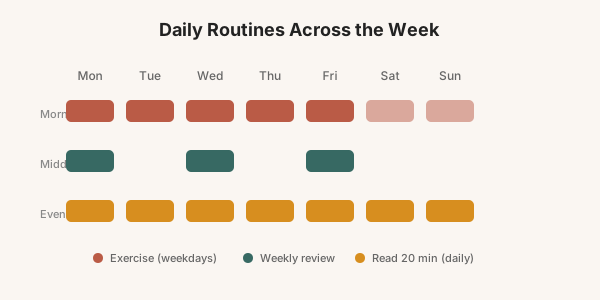
The most effective routine systems cover three time blocks:

"We are what we repeatedly do. Excellence, then, is not an act, but a habit." — Aristotle

Track Routines in Collo

Set up your routines in Collo with specific times and repeat cycles (daily, weekdays, weekly). Check them off each day and watch your consistency grow. Routines appear automatically on your schedule, so they're integrated into your day's plan.

Time Blocking: Why Your Schedule Needs Structure

A to-do list tells you what to do. A schedule tells you when to do it. Without assigned time blocks, tasks float around in your mind, competing for attention and creating anxiety.

What Is Time Blocking?

Time blocking is the practice of assigning specific time slots to your tasks. Instead of "I'll work on the report sometime today," you schedule "Report: 10:00–11:30 AM." This transforms vague intentions into concrete commitments.

Benefits of Time Blocking

  1. Eliminates multitasking. When you've committed a block to one task, you have permission to ignore everything else.
  2. Creates realistic expectations. Putting tasks on a timeline reveals when you've overcommitted. It's better to know at 9 AM than at 6 PM.
  3. Protects deep work. Creative and analytical tasks need uninterrupted time. Blocking prevents meetings and emails from fragmenting your most productive hours.
  4. Reduces procrastination. "I'll do it at 2 PM" is more actionable than "I'll do it later."

Tips for Effective Time Blocking

"A 40-hour time-blocked work week produces the same amount of output as a 60+ hour work week pursued without structure." — Cal Newport

Time Block in Collo

Collo's schedule view is built for time blocking. Assign start times and durations to your to-dos, then drag them on the timeline to rearrange. The visual layout gives you a clear picture of your day's structure — and helps you spot overcommitment before it becomes a problem.